


Amir Karpet
“With experience in the carpet industry since 2000, we specialize in the sale of both handmade and machine-made carpets. Our commitment to quality and customer...
 by Amir Nadeem
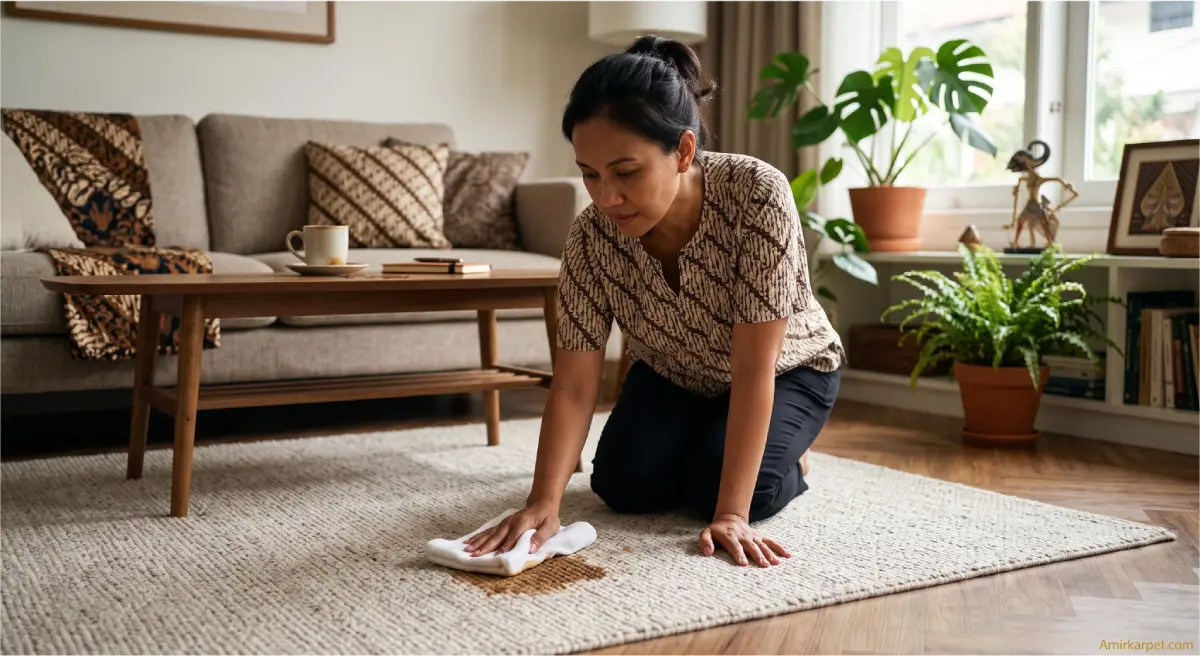
Spill a glass of wine at a dinner party, and your stomach probably drops before the glass even hits the floor. Or maybe it’s your toddler’s marker collection meeting your living room rug, or your dog deciding the carpet is a more convenient bathroom than the yard. Whatever the culprit, the moment you notice a fresh mark on your flooring, one question takes over: how do you remove stains from carpet before they set in for good?
The good news is that most carpet stains — even the stubborn ones — can be treated at home with items you probably already have in your kitchen cupboard. You don’t always need an expensive professional cleaning service or a cabinet full of specialty chemicals. What you need is the right technique, applied quickly and correctly.
In this guide, you’ll learn exactly how to remove stains from carpet using proven, tested methods. We’ll cover why quick action matters, the tools you need, step-by-step instructions for different stain types, natural alternatives for chemical-sensitive households, and how to tackle old stains that have been sitting for weeks or months. By the end, you’ll have a complete toolkit for carpet stain removal that works for nearly any mess life throws at your flooring.
The single biggest factor in successful carpet stain removal isn’t the product you use — it’s timing. Fresh spills sit on top of carpet fibers before they penetrate deep into the backing and padding underneath. The longer a stain sits, the more it bonds with the fiber material, and the more it can attract dirt, which darkens the mark further.
This is especially relevant in humid climates like Indonesia, where higher moisture levels in the air can slow down drying time and give stains more opportunity to set deeper into carpet fibers. If you live somewhere warm and humid, treating spills within the first few minutes is even more important than it might be elsewhere.
As a general rule, the first five to ten minutes after a spill are the most critical window for carpet stain removal. Blotting immediately — never rubbing — prevents the liquid from spreading and pushing further into the pile.
Before you start any carpet stain cleaning project, gather a few basic supplies. Having these on hand means you can react the moment a spill happens, rather than scrambling through the house looking for the right product.
| Supply | Purpose | Where to Find It |
|---|---|---|
| White cloths or paper towels | Blotting without transferring dye | Any household |
| Dish soap | Breaking down grease and food stains | Kitchen |
| White vinegar | Natural stain and odor treatment | Kitchen or grocery store |
| Baking soda | Absorbing moisture and odor | Kitchen or grocery store |
| Hydrogen peroxide | Lifting stubborn organic stains | Pharmacy |
| Spray bottle | Applying solutions evenly | Household or hardware store |
| Soft-bristle brush | Working solution into fibers gently | Household or hardware store |
| Wet/dry vacuum | Extracting moisture after treatment | Household or rental |
Keeping a small “stain kit” in a cupboard near your living area can save you precious minutes when an accident happens, which makes a real difference in how successfully you remove stains from carpet.
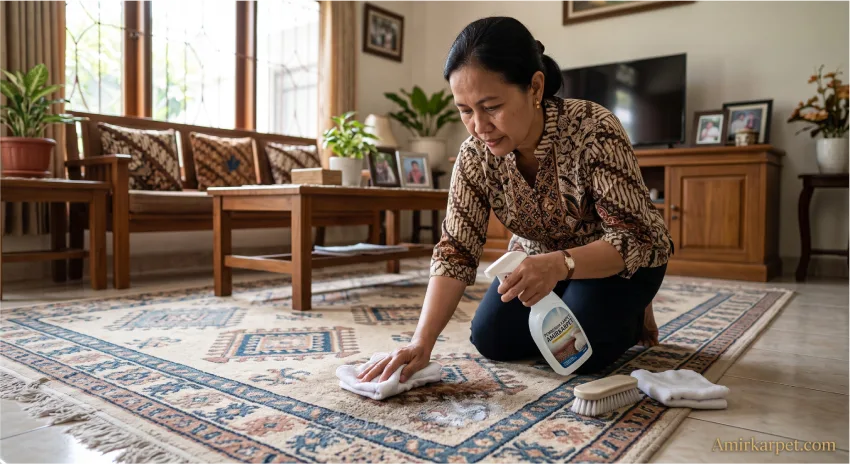
Always blot instead of rubbing to lift stains without damaging carpet fibers.
Regardless of what caused the mark, most carpet stain removal follows a similar core process. Here’s the step-by-step approach that works as a foundation for nearly every stain type.
Use a clean, white cloth to blot the stain from the outside edges toward the center. Rubbing spreads the stain and pushes it deeper into the carpet fibers, making carpet stain removal much harder later.
Mix a small amount of dish soap with warm water, or use a dedicated carpet stain remover. Apply a small amount directly to the stain rather than soaking the area.
Using a soft-bristle brush, gently work the solution into the fibers in a circular motion. Avoid aggressive scrubbing, which can damage the carpet pile.
Blot the area with a fresh cloth to lift the loosened stain and cleaning solution. Repeat as necessary until no more color transfers to the cloth.
Dab the area with a cloth dampened in plain water to remove any soap residue, then blot dry. Place a fan nearby or open a window to speed up drying and prevent mold or mildew from developing in humid conditions.
This basic sequence forms the backbone of nearly every method used to remove stains from carpet, whether you’re dealing with coffee, wine, or pet accidents.
If you prefer natural, non-toxic solutions — especially in households with children or pets — a homemade carpet stain remover can be just as effective as commercial products for many common spills.
Mix equal parts white vinegar and water in a spray bottle. This solution works well to remove stains from carpet naturally, particularly for water-based spills like juice, tea, or muddy footprints. Spray lightly, let sit for five minutes, then blot.
For deeper stains, combine baking soda with a small amount of vinegar to create a bubbling paste. Apply it directly to the stain, let it sit until it dries completely (usually a few hours), then vacuum up the residue. This combination is particularly effective for odor-causing stains like pet accidents.
Combine one tablespoon of dish soap with two tablespoons of hydrogen peroxide and two cups of warm water. This homemade carpet stain remover is excellent for organic stains such as blood, grass, or food-based spills, since hydrogen peroxide helps break down pigments that cause discoloration.
Immediately after a red wine or juice spill, cover the area generously with table salt. The salt absorbs the liquid before it sets, making it easier to vacuum up and treat afterward with a vinegar solution.
Below is a quick comparison of natural ingredients and what they work best on, useful for anyone who wants to remove stains from carpet naturally without harsh chemicals.
| Natural Ingredient | Best For | How It Works |
|---|---|---|
| White vinegar | Juice, tea, coffee, mud | Breaks down acidic and tannin-based stains |
| Baking soda | Odors, grease, pet stains | Absorbs moisture and neutralizes smell |
| Hydrogen peroxide | Blood, grass, food stains | Oxidizes and lifts organic pigments |
| Table salt | Wine, fresh liquid spills | Absorbs liquid before it sets into fibers |
| Dish soap | Grease, oil-based stains | Breaks down fats and oily residues |
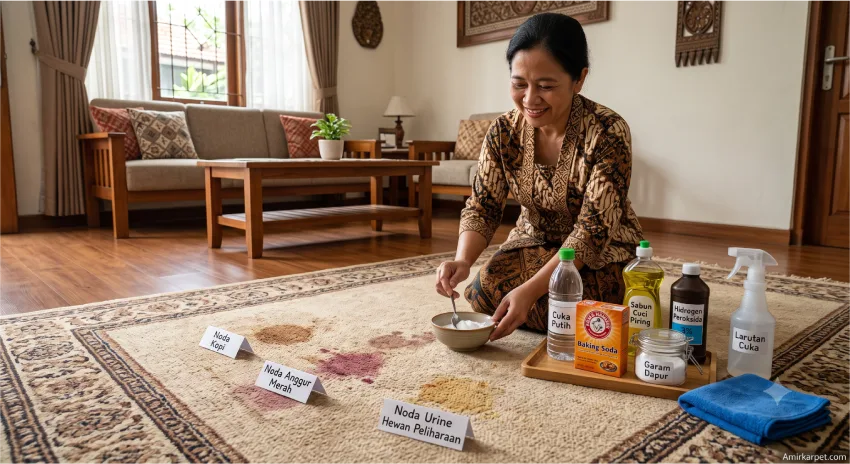
Different stains require different cleaning methods for the best results.
Different stains require slightly different approaches. Here’s a breakdown of common household stains and the most effective carpet stain treatment for each.
Blot excess liquid immediately, then apply a mixture of one tablespoon of dish soap, one tablespoon of white vinegar, and two cups of warm water. Blot until the stain lifts, then rinse with plain water.
Cover with salt or baking soda to absorb the liquid, then treat with a hydrogen peroxide and dish soap mixture. Always test on a hidden area first, since peroxide can lighten certain dyed carpets.
For urine or vomit stains, blot thoroughly first, then apply an enzyme-based cleaner or a vinegar and baking soda combination. Enzyme cleaners are particularly effective because they break down the proteins that cause both the stain and the lingering odor — something regular soap can’t fully address.
Sprinkle cornstarch or baking soda over the stain to absorb the oil, let sit for 15 minutes, then vacuum. Follow up with a dish soap solution to lift any remaining residue.
Dab (never rub) with rubbing alcohol on a clean cloth, working from the outside in. Follow with a dish soap and water rinse to remove any alcohol residue.
Always use cold water, since hot water can set protein-based stains permanently. Blot with cold water first, then apply a hydrogen peroxide solution for stubborn traces.
Not every stain gets treated right away. Maybe you moved into a home with mystery marks already on the carpet, or a spill went unnoticed for weeks. Learning how to remove old carpet stains takes a bit more patience, but it’s often still possible.
Old carpet stain removal rarely works in a single attempt, so patience and repetition are key to a good outcome.
Choosing between a homemade solution and a commercial product depends on the stain type, your carpet material, and your comfort with chemical cleaners. Here’s a side-by-side look to help you decide.
| Factor | DIY Carpet Stain Remover | Store-Bought Carpet Stain Remover |
|---|---|---|
| Cost | Very low, uses household items | Moderate to high per bottle |
| Effectiveness on fresh stains | High for most common spills | High, often formulated for speed |
| Effectiveness on old stains | Moderate, may need repeat treatments | Higher, with enzyme or oxidizing formulas |
| Chemical exposure | Minimal, safer for kids and pets | Varies, check labels for pet/child safety |
| Convenience | Requires mixing | Ready to use immediately |
| Best for | Everyday spills, budget-conscious households | Deep-set or stubborn stains |
Whichever route you choose, always test any solution on a hidden patch of carpet first to check for colorfastness before applying it to a visible stain.
Removing existing marks is only half the battle. These carpet cleaning tips can help you avoid repeat trips down the same stain-removal road.
What is the fastest way to remove stains from carpet?
Blot the spill immediately with a clean cloth, then apply a mixture of dish soap and warm water, working from the outside of the stain inward. Acting within the first few minutes gives you the best chance of full removal.
Can I remove stains from carpet naturally without chemicals?
Yes. White vinegar, baking soda, hydrogen peroxide, and salt are all effective natural options depending on the stain type. These homemade carpet stain remover recipes work well for most everyday spills.
How do I remove stubborn carpet stains that won’t come out?
For stubborn carpet stains, re-wet the area, apply a hydrogen peroxide and dish soap mixture, let it sit for 20–30 minutes, and repeat the process if needed. Steam cleaning can also help lift deeply set stains.
Does baking soda really help with carpet stain removal?
Yes. Baking soda absorbs moisture and neutralizes odors, making it especially useful for pet stains and grease spots. It’s often combined with vinegar for extra cleaning power.
How often should I deep clean my carpet to prevent stains?
Most homes benefit from a deep carpet clean every six to twelve months, though households with pets, children, or higher humidity levels may need more frequent cleaning to keep stains and odors under control.
Knowing how to remove stains from carpet doesn’t require expensive equipment or professional help in most cases. With a few household ingredients, some patience, and quick action when spills happen, you can tackle everything from fresh coffee spills to old, stubborn marks that have been bothering you for months. The key is combining the right carpet stain treatment for the specific stain type with consistent carpet cleaning habits that prevent future marks from setting in.
Start by putting together a simple stain kit today, so the next time a spill happens, you’re ready to act fast. Try one of the methods above on your next carpet mishap, and see how much of a difference quick, proper treatment can make. Your carpet — and your peace of mind — will thank you.
by Amir Nadeem
 22Jul
by Amir Nadeem
22Jul
by Amir Nadeem