


Amir Karpet
“With experience in the carpet industry since 2000, we specialize in the sale of both handmade and machine-made carpets. Our commitment to quality and customer...
 by Amir Nadeem
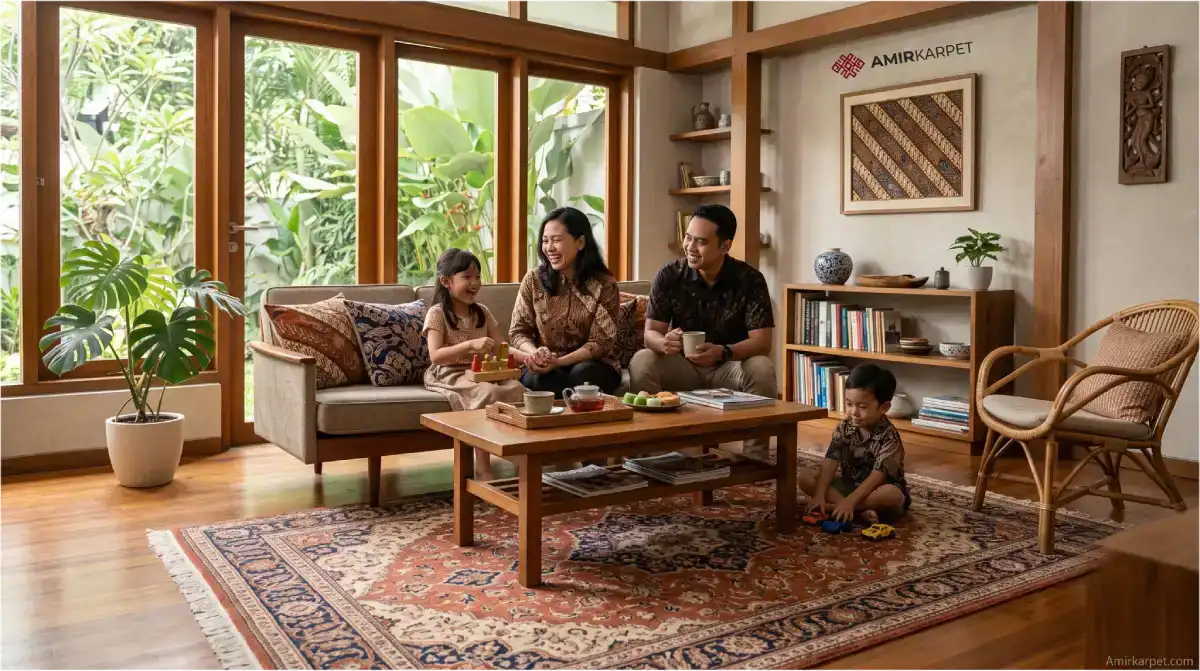
Rugs are one of the first things you notice walking into any beautifully finished home — a well-chosen floor covering, placed the right way. These pieces are one of the most underrated design tools available — they anchor furniture, add warmth underfoot, soften hard floors, and instantly change the mood of a space. Yet so many people get stuck picking the wrong size, the wrong material, or the wrong style, and end up with a rug that just doesn’t work.
If you’ve ever stood in a showroom (or scrolled through a website) overwhelmed by countless patterns, textures, and price tags, this guide is for you. Below are 17 practical, real-world secrets that interior designers use to choose a floor covering that actually elevates a room — whether you’re furnishing a living room, a bedroom retreat, or a hard-wearing patio space.
By the end of this article, you’ll understand sizing, materials, placement, and cleaning, and where to find great options at any budget without the guesswork. Let’s get into it.
Before diving into the secrets, let’s answer a question people search constantly: what is a rug, and how does it differ from carpet? It’s a piece of thick textile flooring that’s placed over an existing surface — hardwood, tile, laminate, or concrete — rather than being fixed to it. Carpet, by contrast, is installed wall-to-wall and permanently attached to the subfloor.
This distinction matters because these floor pieces are flexible. You can move them, replace them, layer them, or take them with you when you move house. That flexibility is exactly why they remain one of the most popular home decor purchases worldwide, from a small entryway mat to a statement piece anchoring an entire living room.
Not all rugs are created equal, and knowing the categories helps you narrow your search fast.
Other popular categories include vintage-inspired pieces with a faded, lived-in charm, farmhouse looks, contemporary options, and abstract prints. Knowing which family of styles matches your existing decor is the first real secret to narrowing thousands of options down to a shortlist.
| Style | Best For | Typical Look |
|---|---|---|
| Modern | Contemporary living rooms, offices | Bold geometric patterns, minimal color |
| Traditional / Persian | Formal living or dining rooms | Ornate medallions, rich color |
| Bohemian | Bedrooms, reading nooks | Layered textures, tassels |
| Farmhouse | Kitchens, entryways | Neutral tones, subtle stripes |
| Shag | Bedrooms, cozy corners | Deep pile, soft texture |
| Custom-made | Any unique space | Made-to-order size and design |
Material affects everything — durability, softness, cost, and cleaning. When shopping for wool rugs, you’ll find the fiber is prized for durability and natural stain resistance, making it a long-term investment. Jute and cotton bring an eco-friendly, natural texture, ideal for casual, relaxed spaces. Polypropylene is budget-friendly and often used both indoors and outdoors because it resists moisture.
If you want an ultra-soft feel underfoot, look for a high pile option; if you prefer easy upkeep, low pile is simpler to vacuum and maintain. For busy households, machine-washable options have become hugely popular because they combine style with practicality — a game-changer for kitchens and kids’ rooms where spills happen often.
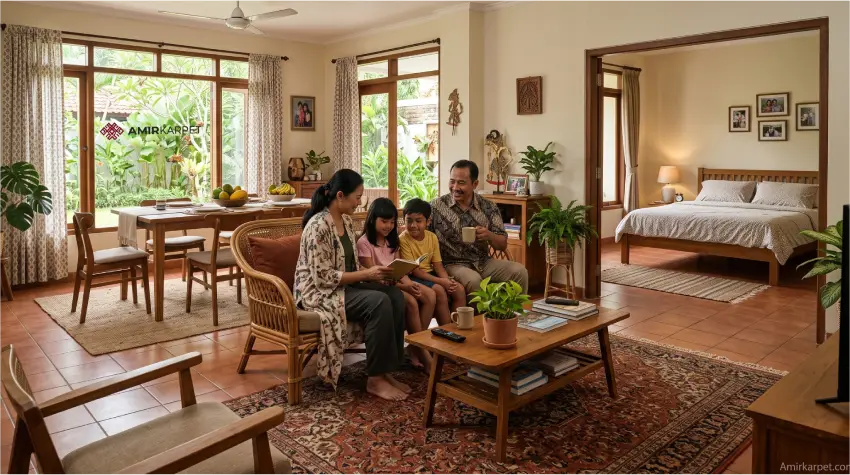
See how choosing the correct rug size creates a balanced and comfortable home.
Every room has different needs, so here’s how to choose the right piece room by room.
Rugs for living room spaces should be large enough to unite your seating area — think oversized pieces that extend at least partly under your sofa and chairs. Rugs for bedroom setups work best when the piece extends beyond the sides and foot of the bed, so your feet land on softness every morning. Rugs for dining room tables need enough coverage so chairs stay on the piece even when pulled out — typically 24–30 inches beyond the table edge on all sides.
For rugs for kitchen floors, prioritize non-slip, washable options since kitchens see heavy foot traffic and spills. Rugs for office spaces benefit from low pile, durable materials like polypropylene or wool that stand up to rolling chairs. A long, narrow runner is perfect for hallways and galley kitchens alike.
Getting the size right is arguably the single biggest factor in whether a rug looks intentional or accidental. Too small, and it looks like an afterthought floating in the middle of the room. Too large, and it can overwhelm the space.
A simple approach: measure your furniture grouping first, then choose a piece that’s at least 6–12 inches larger on each side. For a round shape under a round table, add about 24 inches to the table’s diameter.
| Room | Recommended Size | Placement Tip |
|---|---|---|
| Living Room | 8′ x 10′ or 9′ x 12′ | Front legs of furniture on the piece |
| Bedroom | 8′ x 10′ | Extend 18–24″ beyond bed sides |
| Dining Room | 9′ x 12′ (for 6-seat table) | Chairs stay on it when pulled out |
| Kitchen | Runner or 5′ x 7′ | Place in front of sink/stove |
| Entryway/Hallway | Runner, 2.5′ x 8′ | Center along walking path |
| Office | 5′ x 8′ | Cover chair’s full rolling range |
Once you know how to layer and mix pieces, the room transforms. Placing a smaller vintage or boho-style piece over a larger neutral base adds texture without visual clutter. Mixing bold colors with neutral furniture — or vice versa — creates balance. For small apartments, a well-chosen round shape can make a corner feel curated rather than cramped.
If you have pets, look for wool or synthetic blends that resist shedding and are easier to clean than delicate natural fibers. Families with kids benefit from a soft, cushioned option with stain resistance. If you love hosting outdoors, a weather-resistant polypropylene piece withstands sun and rain while still looking premium.
For renters or people who redecorate often, custom sizing lets you get an exact fit without committing to a permanent flooring change — a smart move before investing in a large, oversized piece for a space you may not stay in long-term.
When you’re ready to buy rugs online, you’ll find everything from budget-friendly finds to high-end designer collections, often with far more selection than a nearby physical store. Online retailers also make it easy to compare price, size, and material, and many now offer free returns so you can test a piece at home before committing.
That said, visiting a local showroom lets you feel the texture, see true colors, and get expert advice — especially valuable for hand-knotted or Persian-style pieces where quality varies significantly. Many shoppers now search for local artisans to work on bespoke sizing and pattern requests.
| Factor | Buying Online | Buying In-Store |
|---|---|---|
| Selection | Very wide, budget to premium | Limited to stock on hand |
| Price | Often better discounts | Can negotiate in person |
| Texture/Color Accuracy | Harder to judge | See and feel before buying |
| Convenience | Ships to your door | Immediate takeaway |
| Best For | Budget shopping, custom orders | Fine handmade pieces, expert advice |
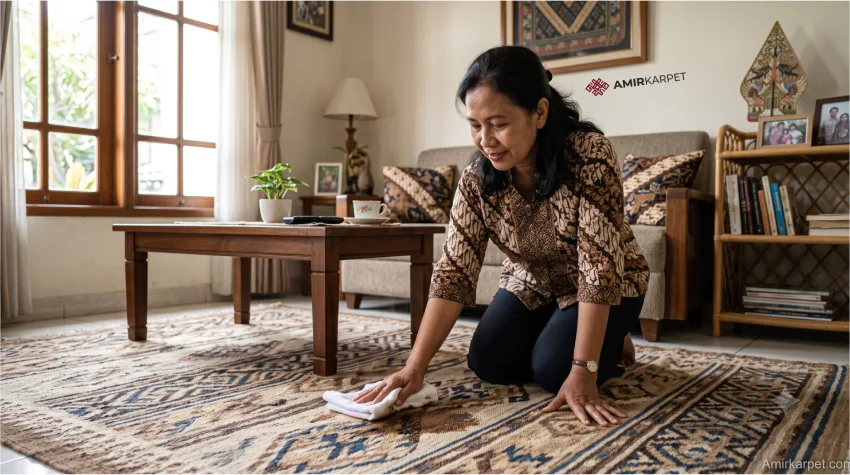
Blot spills immediately to keep your rug looking beautiful for years.
Knowing how to clean rugs properly extends their life significantly. For light maintenance, vacuum weekly (twice weekly in high-traffic homes) and rotate the piece every 6–12 months for even wear. Check the care label first — many modern options are literally machine washable, while wool and other natural fibers typically require spot cleaning or professional service.
To tackle stains, blot (never rub) spills immediately with a clean cloth, then use a mild detergent diluted in cool water. For deeper cleaning, a professional service uses specialized equipment safe for delicate materials like wool or silk blends.
A common question is how often cleaning should happen. As a general rule of thumb: vacuum weekly, deep-clean every 12–18 months for low-traffic areas, and every 6–12 months for high-traffic zones like entryways or living rooms. Outdoor pieces should be hosed down and air-dried monthly during heavy-use seasons.
Beyond regular cleaning, using a non-slip pad underneath prevents slipping and reduces wear on the backing. A good pad also protects hardwood floors from scratches and adds extra cushioning — especially helpful under soft pieces in bedrooms. Keep them out of direct, prolonged sunlight where possible, as UV exposure can fade even high-quality wool and Persian-style pieces over time.
Whether you’re after affordable rugs for a starter apartment or a premium piece for a forever home, there’s a tier for every budget. Discount and polypropylene options offer great style-per-dollar for renters. Mid-range wool and cotton pieces balance durability and price. At the top end, hand-knotted oriental designs and custom orders represent long-term investment pieces that can last decades with proper care.
1. What is the best material for high-traffic areas?
Wool and polypropylene are generally the best choices for hardwood floors and busy hallways, thanks to their durability and stain resistance.
2. Rug vs carpet — which is better for renters?
A movable floor covering is typically better for renters since it doesn’t require installation and can be swapped or taken along when you move.
3. How do I know what size to buy?
Measure your furniture arrangement and choose a piece that extends at least 6–12 inches beyond the seating area.
4. Are washable options as durable as traditional ones?
Quality machine-washable pieces have improved significantly and now offer solid durability for kitchens, kids’ rooms, and pet-friendly homes, though hand-knotted wool still leads in longevity.
5. How often should rugs be cleaned to stay fresh?
Vacuum weekly and deep-clean every 6–18 months depending on foot traffic, as outlined above.
Choosing the right rugs doesn’t have to be overwhelming once you understand size, material, style, and placement. Whether you’re shopping for a plush piece for the living room, a durable runner for the hallway, or an easy-care option for a busy kitchen, the secrets above will help you make a confident choice.
Ready to find your perfect fit? Browse our full collection — spanning budget-friendly finds to luxury, made-to-order pieces — and bring your space to life today.
by Amir Nadeem
 22Jul
by Amir Nadeem
22Jul
by Amir Nadeem